
What’s the Best Way to Move a Large Piece of Furniture You Can’t Disassemble in Tucson?
What’s the Best Way to Move a Large Piece of Furniture You Can’t Disassemble?
Some furniture just won’t come apart — solid wood armoires, sleeper sofas, antique hutches, oversized sectionals. The best approach is a combination of proper equipment (furniture dollies, moving straps, and furniture sliders) and at least two people who know how to angle bulky pieces through doorways without forcing them. Trying to muscle something heavy without the right tools is how walls get gouged and backs get thrown out.
Why Big Furniture Is Harder Than It Looks

The Doorway Math Problem
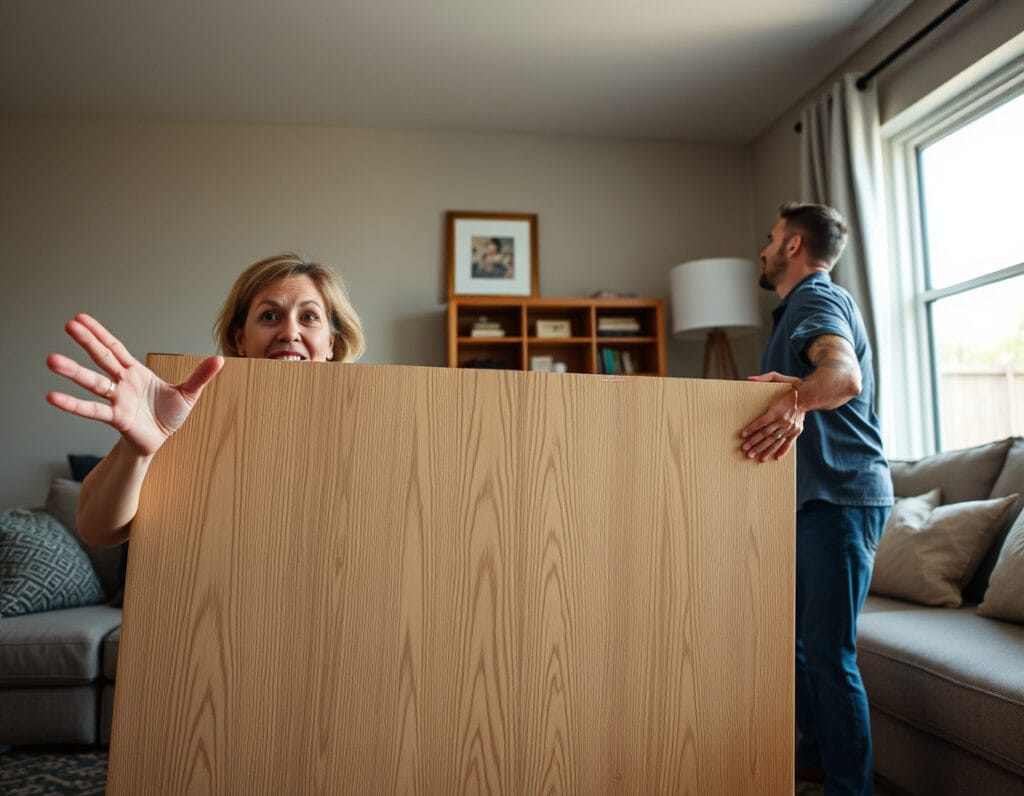
Standard interior doorways in older homes measure about 28 to 30 inches wide. A large dresser or armoire can be 36 inches or wider. That gap doesn’t close itself. The fix is almost always to tilt the piece diagonally and pivot it through — a technique called the “hook and pivot” that professional movers use constantly. It requires someone who can read the geometry of a room in real time and call adjustments on the fly. Getting it wrong means a dented door frame or a scratched finish.
Some pieces genuinely won’t fit through a standard door at any angle. In those cases, movers will look at removing the door and its hinges to buy an extra inch or two. That small change often makes the difference.
Weight Distribution and Injury Risk
A king-size sleeper sofa can weigh close to 300 pounds. A solid hardwood dining table with a thick top can easily hit 200. The danger isn’t just the total weight — it’s how that weight shifts when the piece is tilted. Moving straps and harnesses distribute the load across your shoulders and back rather than concentrating it in your wrists and lower back. Without them, fatigue sets in fast and the risk of dropping something or straining a muscle goes up sharply.
Furniture sliders, the flat pads that go under legs, can cut effort dramatically on hardwood or tile floors. On carpet they work less well, and that’s where a low-profile furniture dolly becomes the right tool instead.
When to Call a Professional Instead of Figuring It Out Yourself
Signs the Job Is Beyond a DIY Attempt
There are a few clear signals that a piece of furniture needs a professional crew rather than a couple of friends and a YouTube video. If the item weighs over 150 pounds, if there are stairs involved, or if the furniture has sentimental or high dollar value, the math changes. The cost of professional moving help is almost always less than replacing a damaged floor, repainting a stairwell wall, or visiting urgent care for a back injury.
Pieces like grand pianos are a category of their own — they require specialized equipment and experience that goes well beyond a standard move. E-Z Move Tucson handles those specifically; you can read more on the piano moving service page.
How a Moving Crew Handles It
A trained crew will walk the route first — checking ceiling height on stairwells, measuring doorways, looking for tight turns in hallways. They’ll pad the corners of the furniture and the door frames before anything moves. Furniture blankets go on first, then straps. Nothing gets lifted until everyone knows their role and the path is clear.
Local residents moving within the area can see the full range of what a crew handles on the moving services page. If a piece genuinely cannot exit through any doorway, a crew may discuss options like removing a window or disassembling a frame — things most people would never think to try on their own.
For context on how the City of Tucson handles residential permitting for structural work (like widening a doorway), that’s a separate conversation, but it’s worth knowing if you’re dealing with a permanent obstacle. The American Moving and Storage Association also publishes guidance on best practices for handling oversized items safely.
Related Questions
Do movers charge more to move a single heavy item versus a full household?
Yes, usually. Moving a single heavy or oversized item often involves a minimum labor charge, specialized equipment fees, and sometimes extra crew members. It’s typically quoted separately from a full-move estimate — call ahead and describe the piece in detail so there are no surprises on moving day.
What should I do to prepare a room before movers arrive to move a large piece of furniture?
Clear a path at least 36 inches wide from the furniture’s current location to the exit point. Remove rugs that could bunch or slip, take doors off hinges if clearance is tight, and have a furniture pad or blanket ready to protect floors at pivot points. The more prep you do before the crew arrives, the faster — and cheaper — the job goes.