
Commercial Moving in Tucson: What Business Owners on Broadway Need to Know
What Office Relocations Along the Broadway Corridor Actually Involve
Moving a business is nothing like moving a household. The stakes are higher, the timelines are tighter, and a single day of downtime can cost more than the entire move itself. For companies operating near the East Broadway Boulevard corridor — one of the busiest commercial stretches in the area — that pressure is real and very specific.
Think about the logistics. You have workstations, server racks, filing cabinets, reception furniture, and breakroom equipment, all of which need to be catalogued, packed, moved, and reassembled before your team shows up Monday morning. Unlike a residential job where a scratched dresser is frustrating but manageable, a damaged server or a missing contract binder can trigger real financial consequences.
That’s why commercial moving requires a different kind of planning. You need a licensed and insured crew that understands business timelines, not just a group with a truck and some dollies. Every item needs to appear on an inventory list. Every piece of equipment needs to be wrapped in moving blankets or shrink wrap. The foreman needs to coordinate with your building manager about loading dock access, elevator reservations, and floor protection requirements.
Businesses near the intersection of Broadway and Alvernon Way, or those tucked into the commercial blocks closer to Country Club Road, have all of these considerations amplified by the traffic patterns on Broadway itself. Scheduling your crew’s arrival before 7 a.m. or after 6 p.m. can make the difference between a four-hour job and an eight-hour one.
For a full picture of what a professional office move involves step by step, the Moving Day Coordination guide breaks it down from first truck arrival to final walkthrough.
Protecting Your Equipment During the Move
Electronics are the single biggest liability in any office relocation. Monitors, printers, and networking hardware don’t travel well without the right packing materials. Dish packs and custom crates are standard for fragile items, but server equipment often requires anti-static wrap and climate-aware transport. If your office has anything that qualifies as specialty equipment, ask your moving crew specifically how they handle it before you sign a contract or pay a deposit.
Floor protection and door jamb protectors aren’t just courtesies — in most commercial leases, the outgoing tenant is liable for damage to common areas during move-out. A reputable moving company will bring these materials automatically. If they don’t mention them, that’s worth noting.
Why Business Owners Near the Sam Hughes Area Need a Commercial-Specific Crew

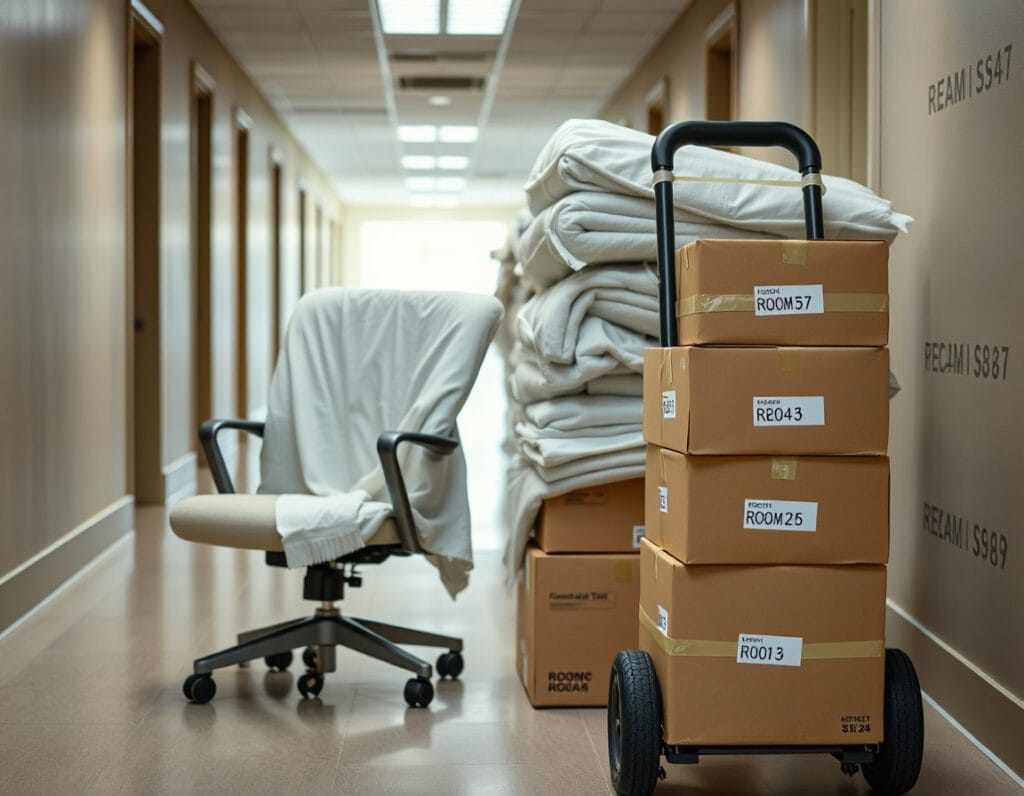
The neighborhoods immediately north of Broadway, including Sam Hughes, contain a mix of small professional offices, medical practices, and boutique retail spaces. These buildings often share parking lots, have narrow hallways, and weren’t designed with large furniture removal in mind. A crew that handles residential jobs all week may not have the right equipment or experience to navigate these constraints efficiently.
Commercial jobs require a foreman who can make real-time decisions. If the elevator is reserved for another tenant until 10 a.m., the crew needs a plan. If the loading dock is blocked, they need to adapt without burning hours standing around. This is the operational difference between a company that does commercial work and one that just says they do.
There’s also the matter of liability coverage. Valuation and insurance work differently for business moves than residential ones. Office equipment, proprietary hardware, and custom furniture often exceed the standard declared value limits. Before your move date, review what your mover’s liability coverage actually covers — and consider supplemental moving insurance if your equipment value is significant. The Moving Insurance page has a practical breakdown of what coverage options exist and what questions to ask.
Scheduling Around Business Hours Without Losing Productivity
Most successful commercial moves happen in phases. Day one might be non-essential storage and breakroom items. Day two handles workstations and monitors. The server room or IT infrastructure moves last, ideally on a Friday night or over a weekend. This staged approach keeps your team partially operational throughout the process instead of shutting everything down at once.
If your business is near the Walmart Pharmacy on East Broadway or operates in one of the medical or professional offices along that strip, you know that your clients and patients expect continuity. Even a one-day gap in service can send people to a competitor. Phased commercial moves are the practical solution, but they require a moving company that can schedule and dispatch multiple crews across different dates without things falling apart between appointments.
The Commercial Moving Services page covers the specific service structure available for business clients in this area.
Red Flags That Can Derail a Business Relocation
Not every company advertising commercial moving is actually equipped for it. Some of the most common problems business owners report after a bad experience: the crew showed up without enough equipment for a multi-floor job, items went missing between origin and destination, or the final invoice included surcharges and fuel charges that weren’t mentioned in the original quote.
A bill of lading should itemize everything being moved. If a mover resists providing one, or glosses over the valuation section of your contract, that’s a warning sign. Bonded and licensed movers are required to carry documentation of their operating credentials — you can and should ask to see them before booking. The Moving Scams guide walks through the specific tactics used by bad actors, most of which are just as common in commercial moves as residential ones.
It’s also worth checking the FMCSA’s Protect Your Move resource, which is the federal agency that regulates interstate movers and maintains a public database of licensed carriers. Even for local commercial moves, a company registered with FMCSA has cleared a compliance baseline that unregistered operations haven’t.
Gratuity and tipping practices are another area where business owners sometimes get caught off guard. Unlike residential moves where tipping is informal and personal, commercial jobs often involve larger crews working longer hours across multiple days. Setting expectations about tip and gratuity upfront — and factoring it into your relocation budget — avoids awkward end-of-job situations.
Frequently Asked Questions About Commercial Moving in Tucson
How far in advance should a business book a commercial moving company?
For most small to mid-size office moves, booking four to six weeks out gives you enough time to schedule a walkthrough, get a detailed quote, and coordinate building access. Larger jobs involving multiple floors, specialized equipment, or a move during peak months like May through August should be reserved at least eight weeks ahead. Last-minute commercial bookings are possible but limit your options significantly, especially on weekends.
Does a commercial mover handle IT equipment and server disassembly?
It depends on the company. Full-service commercial movers will disconnect, wrap, transport, and reconnect standard office hardware like monitors, desktop towers, and networking switches. True server room migrations usually require a dedicated IT vendor to handle the technical side, while the moving crew handles the physical transport. Always clarify this scope before signing anything — misunderstandings about who handles what are one of the most common sources of conflict on commercial jobs.
What’s included in a commercial moving estimate versus what gets added later?
A properly written commercial estimate should include labor hours, truck size and count, packing materials, floor protection, disassembly and reassembly of standard office furniture, and any stair fees or elevator surcharges relevant to your building. What often gets added later: long carry fees if the truck can’t park close to the entrance, additional time if the job runs over, and charges for specialty crating if it wasn’t discussed upfront. Ask for a written, itemized quote and confirm which scenarios would trigger additional charges before you sign the contract.
Choosing the Right Moving Partner for Your Business
Tucson’s commercial real estate market along corridors like Broadway Boulevard has seen steady activity, with businesses relocating both within the area and bringing operations in from other parts of Southern Arizona. The demand for reliable commercial movers has grown alongside that activity, but the supply of truly experienced business relocation crews hasn’t kept pace.
E-Z Move Tucson handles commercial relocations with the same attention to scheduling and equipment care that business owners actually need. From coordinating loading dock access to managing phased moves across multiple days, the crew is built for jobs that can’t afford a slow or disorganized execution. Whether your office is near East Tucson or further west toward the Rincon Heights corridor, the service area covers it. You can also check the full service area map to confirm coverage for your specific address.
If you’re planning a commercial move and want to understand exactly what to expect before the first truck arrives, reach out to E-Z Move Tucson for a walkthrough and a written estimate. Getting the details right before moving day is always cheaper than fixing problems after.