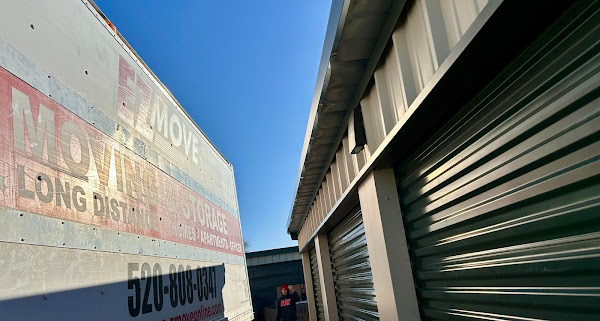
E-Z Move’s long-distance moving division has the experience and knowledge it takes to handle the special demands of long-distance intrastate and interstate moves. Your E-Z Move relocation consultant will be available to provide complete information and answer your questions.
We can direct you to the best packing materials, give you organizational tips, and help you plan the right amount we’ll need to get the job done. Check out these moving tips—you’ll want to consider them before hiring long-distance movers.
We believe clear, one-on-one communication translates directly into better service and lower prices. No matter what stage of planning you are at, you’ll hop right on board.
Tucson Long-Distance Moving Company
If you’re looking for long distance movers in Tucson AZ, you’ve come to the right place. By trusting a local company for your long-distance move, you won’t have to worry about your furniture getting mixed up with others in a huge 18 wheeler truck. You won’t have to pay any extra to cover the overhead fees that come with using a national company.
As local Tucson movers we know the area and can work around your schedule.
Ensuring On-time Delivery Since 1999
E-Z Move guarantees the pickup date and provides a specific date for delivery. Need some help moving a few boxes? Loading a truck? Moving across country?
4. Relax, stress-free, while E-Z handles the rest.
5. Move into your new home!
Express Delivery
E-Z Move currently offers long distance moving services from in and around Tucson to anywhere in the United States. However, we want to go above and beyond for your long distance move with our Express Delivery services.
We offer 24-48 hour express delivery to most cities and locations in CA, NV, UT, NM & TX. If you’re in a rush or need to get somewhere quickly, just let us know. We are happy to accommodate your needs.
The map below shows a few of the cities where we offer express delivery.
How a Long Distance Move from Tucson Works
E-Z Move provides reliable long-distance moving services in Tucson, ensuring your belongings are transported safely across any distance. Starting with a consultation to understand your needs, we offer services such as packing, loading, and transportation, ensuring a smooth transition to your new home. With years of experience, our team handles your possessions with care and precision.
E-Z Move offers a range of long-distance services designed to cover all your moving needs:
Safe Transportation: Efficient and secure delivery across state or country borders.
Furniture Assembly & Disassembly: Expert handling of large furniture, including careful reassembly at your destination.
Storage Solutions: Flexible storage options, both short-term and long-term, to fit your schedule.
Vehicle Transportation: Safe transport of your car to your new location.
Custom Crating: Specialized crating for fragile or valuable items, ensuring maximum protection during transit.
Our Tucson Moving Services
Whether you are moving in or around Tucson or planning a long distance move, EZ Move will be there every step of the way. We have a skilled team of local and professional Tucson movers with the right tools and equipment to help you get to where you want to go in no time. Our exceptional Tucson moving services include:
Proper preparation is crucial for a successful long-distance move. E-Z Move provides valuable tips and guidance to help you get ready for your relocation. From packing essentials to managing timelines, our team ensures you are well-prepared for every step of the moving process. Reach out to us for expert advice and personalized support to make your move as smooth and stress-free as possible.
A long-distance move is a regulated, documented operation — and that is exactly how we run it. EZ Move holds active interstate authority under USDOT 1966983 and MC-739115, so we move households from Tucson out along the Interstate 10 corridor to Phoenix, California, New Mexico, and Texas, and cross-country beyond. Every long-distance job starts with a binding or non-binding written estimate, a full inventory, and a bill of lading, all under FMCSA Household Goods regulations.
Desert long-hauls need extra care: we shrink-wrap and blanket-pad against dust and heat, load heat-sensitive electronics and artwork last-on and first-off, and offer climate-controlled storage for gaps between closings. You choose your coverage — basic Released-Value Protection (60¢ per pound) or upgraded Full-Value Protection — spelled out before we roll.
Long-Distance Moving FAQs
Are you licensed for interstate moves?
Yes — EZ Move (Tucson Moving Systems Inc) operates under USDOT 1966983 and MC-739115, authorized for household goods and compliant with FMCSA regulations. Verify at safer.fmcsa.dot.gov.
What protects my belongings on a cross-country move?
Every interstate move includes Released-Value Protection (60¢/lb) at no charge; you can upgrade to Full-Value Protection, under which we repair, replace, or reimburse. It is all on your written estimate and bill of lading.
Where do you move to from Tucson?
Along I-10 to Phoenix, California, New Mexico, and Texas, and nationwide. We plan dust- and heat-protected loading and offer climate-controlled storage between dates.
FAQ
How far in advance should I schedule my long-distance move with E-Z Move?
It’s best to schedule at least 4-6 weeks in advance to ensure availability.
Can E-Z Move handle the transportation of large and fragile items?
Absolutely, our team is experienced in handling large, fragile, and valuable items with care.
What is included in E-Z Move's long-distance moving service?
Our service includes packing, loading, transportation, unloading, and unpacking upon request.
How does E-Z Move ensure the safety of my belongings during the move?
We use high-quality packing materials and secure loading techniques to protect your items.
Are there any items that E-Z Move cannot transport?
Yes, we do not transport hazardous materials or items prohibited by law.
How does E-Z Move handle delays during a long-distance move?
We keep you informed and make necessary adjustments to ensure a smooth relocation.
Does E-Z Move offer storage options during the move?
Yes, we provide short-term and long-term storage solutions to fit your needs.
What payment methods does E-Z Move accept for long-distance moves?
We accept various payment methods, including credit cards, debit cards, and bank transfers.